
With global uncertainty showing no sign of abating, and a security landscape that continues to deteriorate – countries are investing heavily in their defence capabilities. That’s particularly true for the naval domain, especially submarines, which are critical assets for a range of missions. We look at how countries are modernising their fleets and how GRiD’s technologies are key for sub-surface operations.

Pictured: Royal Navy submarine HMS Astute sails up the Clyde estuary into her home port of Faslane, Scotland for the first time following the journey from Barrow-in-Furness shipyard.
HMS Astute, first of her class, is the lead submarine in the Royal Navy’s fleet of Attack submarines and is one of the most advanced SSNs in the world.
For over a century, submarines have been silent hunters, stalking the world’s oceans and conducting a range of secretive operations. Submarines can be used to deliver long-range missiles (both nuclear and non-nuclear) deep into enemy territory, protect naval groups from attack by other vessels, and conduct highly classified intelligence gathering missions.
After a lull in defence spending in the post-Cold War period, which saw a reduction in traditional defence capabilities as NATO fought non-state actors, countries are investing once again in critical platforms, with submarines being key for naval forces. This includes a slew of new-build programmes, as well as several mid-life upgrade and life-extension programmes.
NATO countries including Sweden, Greece, the Netherlands, Germany and Norway, are all recapitalising their submarine fleets either through new programmes or as upgrade projects.
One of the most advanced nuclear-powered submarine fleets in the world is operated by the UK’s Royal Navy. The service’s newest attack submarine – known as the Astute-class – is one of the most advanced submarines ever to set sail, and its introduction into service is likely to be complete by the end of the decade.
In recent years there has been a renewed focus on the Royal Navy’s submarine fleet, with a particular emphasis on industrial and strategic partnerships with close allies. This has culminated in the UK Government’s decision to build up to 12 new conventionally armed, nuclear attack submarines under what is known as the AUKUS programme, a close defence and security alliance with Australia and the US.
The Royal Navy will also be replacing its nuclear deterrent submarines as part of the Dreadnought programme, another critical submarine programme for the UK that will see four new boats built.
What is GRiD’s role on submarines?
This brings us to the crucial role of GRiD Defence Systems. With a long history of supporting the highly covert and sensitive missions conducted by submarines, GRiD has developed a deep understanding of the unique challenges faced at sea.
With a strong legacy of supporting maritime operations, GRiD is an established leader in rugged technology for submarines. The team does not just build durable systems; we have a deep understanding of the extreme challenges submarine crews face, from the limited space envelope to the complexities of a boat’s electrical systems.
One example is power. Power is non-negotiable when you’re hundreds of metres below the surface. Submarines use AC power and require AC to DC power adapters to convert the voltage for use with their equipment. The key to GRiD’s solution, within this scenario, is our ability to supply AC-powered devices for submarines and the adaptability of our devices to run on either AC or DC power.
This dual-input functionality eliminates the need for bulky, single-purpose AC-to-DC converters, which are typically required to bridge the gap between the submarine’s main power supply and its various DC-powered systems. GRiD’s products can be plugged directly into the submarine’s AC grid.
GRiD has proven electromagnetic compatibility (EMC) expertise, which is critical not only for defence systems but particularly for equipment used on board submarines.
EMC compliance and testing is an essential practice for the safe operation of all electronics, especially those that are mission-critical and cannot be vulnerable to interference.
A submarine’s confined, steel-enclosed environment presents a unique challenge, as it can trap and amplify electromagnetic interference, potentially disrupting vital navigation, communication, and weapon systems.
Equipment used by the UK Ministry of Defence adheres to strict Defence Standards. In the case of EMC requirements, this is DEF STAN 59-411. When an acquisition is made for submarine equipment, GRiD understands these requirements and can demonstrate that it is compatible for safe and reliable operation in this highly sensitive maritime environment.
Secure computing and data storage for submarines
The sensitive missions that submarines carry out mean that they often collect and store significant amounts of classified data, which needs to be stored according to strict guidelines and regulations.
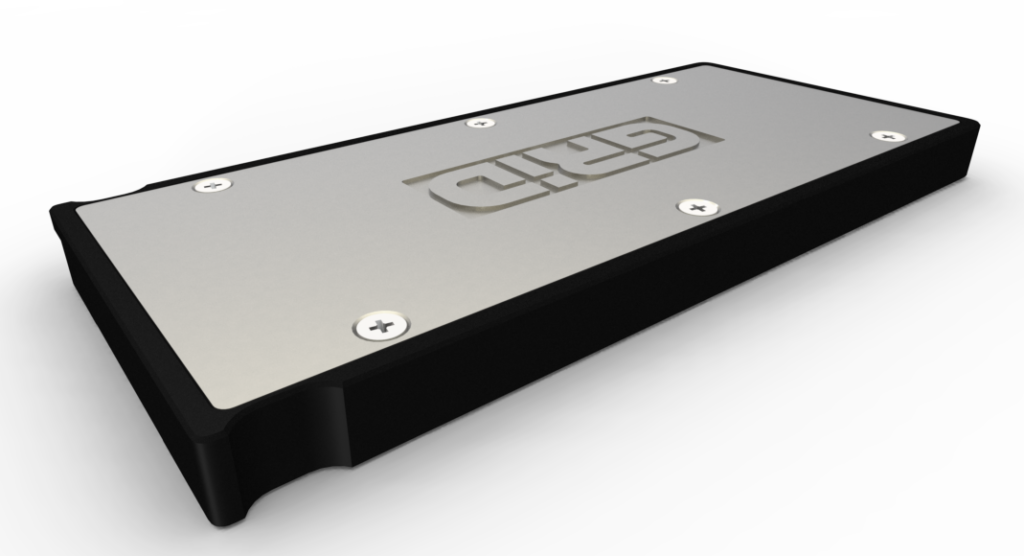
To address this and other data security challenges, GRiD has developed a highly unique ruggedised and removable configuration of Viasat’s Data at Rest Cryptography (DARC) drive. This provides the GRiDCASE laptop and tablet users with significant flexibility in how they store and protect sensitive data at rest, including at Top Secret level.
Approved by the UK’s National Cyber Security Centre (NCSC), the DARC drive can protect data and information at the most stringent security levels in the UK, including Secret and Top-Secret level. In 2024, the NCSC approved the new-generation DARC drive to secure sensitive data at rest at various security levels.
The new DARC solid-state drive (SSD) leverages new interfaces and standards. It supports the smaller and more efficient M.2 form factor, which has several size, weight and power (SWaP) benefits that are critical for submarines.
In addition to M.2, DARC also uses the NVMe (Non-Volatile Memory Express) protocol, which is specifically designed for SSDs and enables higher data transfer speeds. GRiD’s latest products have been built to ensure that there is a quick and efficient way to remove the DARC drive when required, without the need to open the computer.
The GRiD Approach
Traditionally, procurement cycles are recognised as lengthy and often complex processes. A significant challenge within this framework is the risk of newly acquired technology becoming obsolete before it can even be deployed. This is particularly true for commercial-grade laptops, which are subject to rapid technological turnover and limited shelf life.
At GRiD we directly address this critical issue with our line of rugged computers. Designed for longevity, these devices possess an extended shelf life that far exceeds that of their commercial counterparts. This ensures that your capability is a viable, high-performing asset, ready for service now and well into the future.
By eliminating the risk of pre-deployment obsolescence, we provide a more strategic and sustainable capability, ensuring that your technology is not just acquired, but effectively integrated and utilised for its full operational life.
If you want to learn more on GRiD’s product range, please see here or if you would like to discuss how GRiD can support your operations or upcoming requirements in more detail, please get in touch sales@griduk.com.